AI visibility tracking
AI visibility tracking means re-running the same checks on a schedule and watching the direction, because one run is only a snapshot. Model answers shift between runs, so a single mention proves little. A mention rate across twelve prompts, repeated over several weeks, is far stronger evidence that your work moved something.
By The Promptscope team (Product and testing). Last updated .
How to start AI visibility tracking, step by step
- Type your domain into the box above, for example github.com, and run the readiness check.
- Wait a second for the score, then write it down, because today's number is your baseline.
- Then run the mention check on the same day, so both halves of the report share one date.
- Finally, repeat the readiness check after every site change and the mention check on a fixed day each month.
The first 3 runs each day are free. After that, see the pricing page for packs and plans, or read how we test the tool.
AI visibility tracking run against a real site
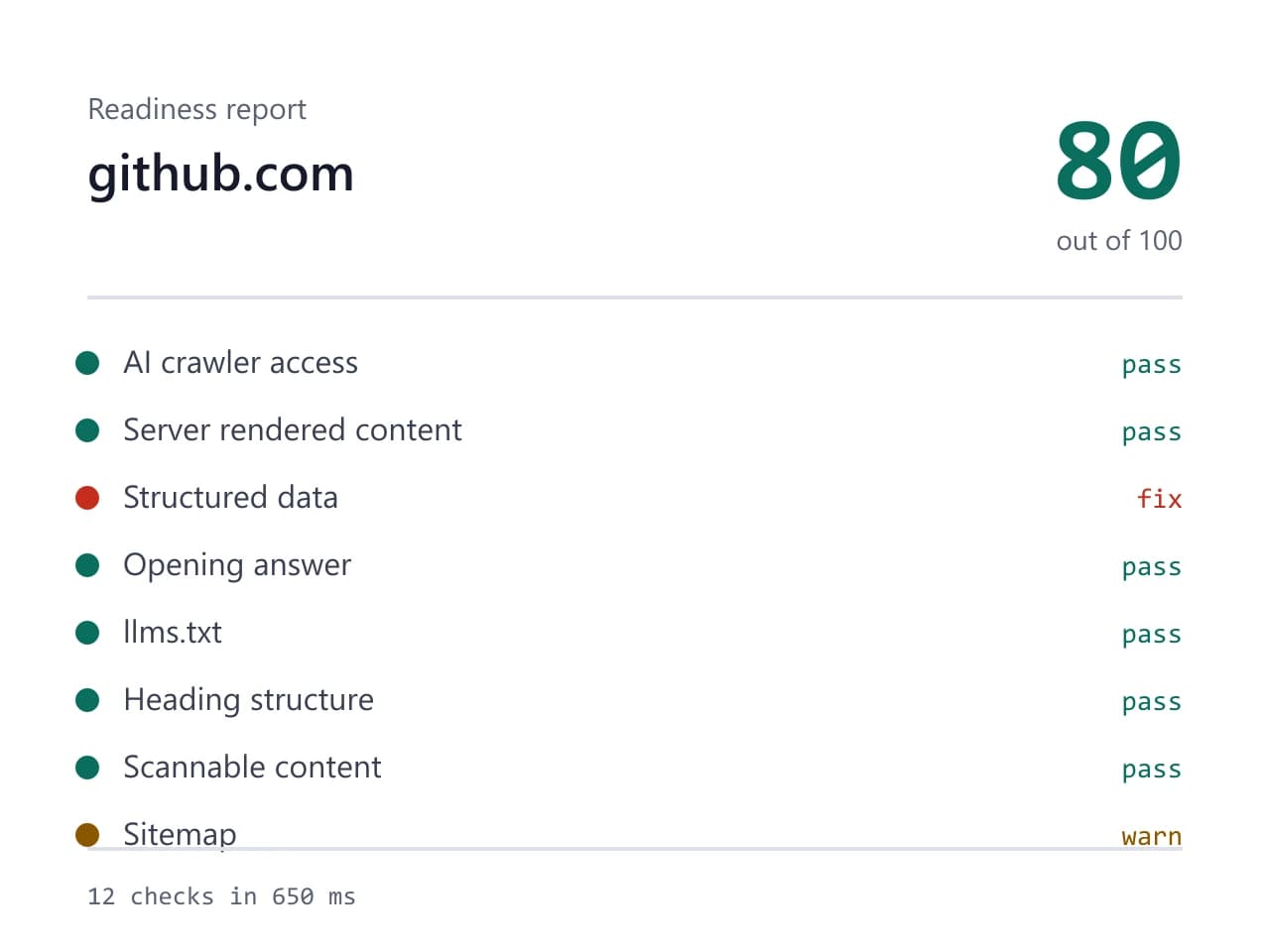
We pointed this checker at github.com and kept what came back. So the card below is an actual report rather than a mockup, and you can run the same check yourself and compare.
- Site we checked
- github.com
- Readiness score
- 80 / 100
- Checks run
- 12
- Needs a fix
- 1
- Warnings
- 3
- AI crawlers allowed
- 8 of 8
- Checked on
- 2026-10-16
How we test: every page runs the same checks against a different real site, and we read each report by hand before publishing it. More on the about page.
Why one run is a snapshot and not a trend
Ask a model the same buyer question twice and you can get two different answers. Sampling, routing and quiet model updates all move the result, so noise comes with the method. Therefore one run tells you what happened once, not what usually happens. A brand that showed up this morning may vanish by evening, and neither event proves much alone.
A rate fixes that. Twelve prompts in one run give twelve chances to appear, so the share that names you carries more signal than any single answer. Then repeat the run across four weeks, and the line either climbs or it does not. Since each point rests on twelve answers, a small wobble reads as normal instead of alarming.
What is worth tracking and what is only noise
Five numbers deserve a column in your sheet. First, the readiness score shows whether engines can still read you. Next, mention rate shows how often a model names you across the twelve prompts. Average position shows where you land when it does. Finally, track which competitors keep recurring and which domains the model cites, because those two columns tell you where the answer comes from.
Noise looks different. A one point move in mention rate is noise. A brand you saw once and never again is noise. Wording changes in the answer are noise as well, since models rephrase constantly. Watch the direction over three or four runs instead, and treat any single run as one data point rather than a verdict.
A sensible cadence for AI visibility tracking
The two halves want different rhythms. Readiness is reactive, so re-run it after any site change. A new plugin or a fresh robots.txt rule can undo a good score in minutes. A blocked crawler is the classic example, since one line from a security add-on caps everything below it. Therefore treat readiness as part of your deploy checklist rather than a monthly chore.
The mention check wants the opposite. Pick a day, run it on that day, and leave it alone in between. A fixed schedule keeps the comparison clean, while reactive runs mostly measure your mood. Monthly suits most small sites, although a fast moving category can justify every two weeks. Also, our tool runs each check on demand today, so keep the history in your own sheet. Scheduled re-runs with stored history belong to the paid plan, and we would rather say so than show you a dashboard we have not built.
What AI visibility tracking cannot tell you
Attribution is the honest gap here. You cannot prove that a model answer caused a signup. For example, most assistants send no referrer at all. Many people also read an answer, then type your name into a search box a day later. Therefore a rising mention rate is a leading indicator, not a revenue number.
Other limits sit in the method. The checker reads one URL at a time, so a large site needs a crawler instead. It also reads server rendered HTML, which means JavaScript only content looks missing. A clean trend line still cannot promise that ChatGPT will recommend you, because what others write about your category matters as well.
What to track, how often, and what counts as real movement
| Signal | How to read it over time |
|---|---|
| Readiness score | re-check after every site change, since a deploy can undo it |
| Blocked crawler flag | treat any change here as urgent, because it caps the score |
| Mention rate | the core trend line, so compare it across runs, not within one |
| Average position | useful when the rate holds steady but the answer reorders |
| Recurring competitors | names that show up in most runs, not a brand you saw once |
| Cited domains | shows which pages a model leans on, so aim your outreach there |
| Answer wording | mostly noise, because models rephrase the same point constantly |
| A single mention | weak evidence alone, so wait for the rate to move as well |
AI visibility tracking FAQ
How often should I re-run the checks?
Re-run the readiness check after any site change, because a deploy can undo a good score in minutes. Run the mention check on a fixed day instead, monthly for most sites. A fixed day keeps runs comparable, while reactive runs tell you more about your mood than your visibility.
Why did my result change when nothing on my site changed?
Models sample their answers, so the same question can return a different brand list an hour later. Vendors also update models quietly. Therefore a single change is normal, and only a move that holds across three or four runs is worth acting on.
Does the tool track my results automatically?
Not today. Every check runs on demand, and you keep the numbers yourself, for example in a spreadsheet with one row per run. Scheduled re-runs with stored history are a paid plan feature, so we would rather say that plainly than show a dashboard that does not exist yet.
Can I prove that ChatGPT sent me a customer?
No, and nobody can prove it cleanly. Assistants usually send no referrer, and many people read an answer and then search for your name later. So treat mention rate as a leading indicator, and watch it next to branded search and direct traffic.
What is the smallest useful AI visibility tracking setup?
One sheet with six columns: date, readiness score, blocked crawler yes or no, mention rate, average position, and the competitor names you saw. Then add one row per run. After four runs you have a trend, although the first two rows will feel useless while the line is short.